
What Are the New CCPA Risk Assessment Requirements?
California's privacy regulator just made risk assessments mandatory, not optional. Starting in 2025, businesses processing significant volumes of California consumer data must conduct and document formal cybersecurity risk assessments under the California Consumer Privacy Act (CCPA). The California Privacy Protection Agency (CPPA) published final regulations requiring annual assessments that identify risks to consumer data, evaluate existing safeguards, and document remediation plans.
This isn't theoretical: the CPPA has signaled enforcement will prioritize businesses that skip assessments. Penalties reach $7,500 per intentional violation — and if you're processing data without documented risk reviews, that's intentional in their eyes. Before you panic about compliance overhead, understand this: scanning your site for vulnerabilities is now table stakes, not a nice-to-have.
Who Must Complete CCPA Risk Assessments?
Not every California business needs formal assessments — yet. The regulations target businesses that:
- Process personal information of 10+ million California consumers annually
- Derive 50%+ of revenue from selling or sharing personal information
- Process sensitive personal information (health data, financial data, precise geolocation) for 100,000+ consumers
Smaller businesses aren't exempt from CCPA's security requirements, just the formal assessment paperwork. But here's the catch: if you're breached and can't demonstrate reasonable security measures, regulators and plaintiff attorneys will argue you should have been doing assessments all along. Insurance carriers are already asking about risk assessment documentation during underwriting.
The threshold numbers sound high until you realize "processing" includes any business that runs analytics, uses third-party SDKs, or operates a cookie scanner without proper consent. Most mid-sized SaaS companies and e-commerce sites hit these triggers faster than their legal teams expect.
How Often Do CCPA Risk Assessments Need to Be Performed?
Annually, at minimum — but that's just the baseline. The regulations require assessments whenever you:
- Launch new products or features that process personal information
- Adopt new technologies (hello, every AI integration you shipped last quarter)
- Experience a security incident or near-miss
- Significantly change data processing operations
Think of it like financial audits: the annual review is scheduled, but material changes trigger interim assessments. If you're shipping code weekly, your risk profile changes weekly. Static annual reviews become outdated the moment you deploy.
Smart teams are automating continuous monitoring with tools that flag when new data collection practices appear. Running a security header check after deployments catches misconfigurations before they become assessment findings.
What Should a CCPA Risk Assessment Include?
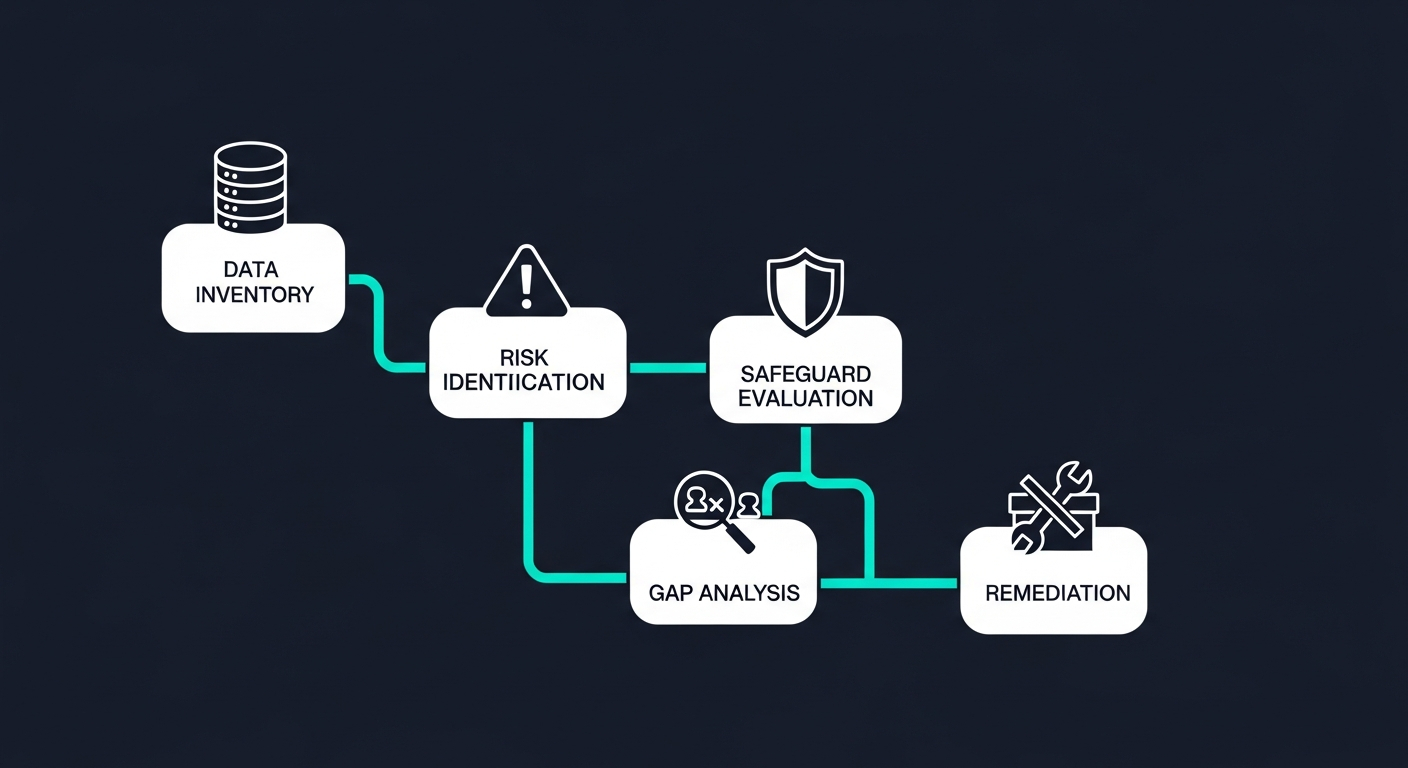 CCPA risk assessment process flowchart diagram
The CPPA wants specific documentation, not vague security theater:
Inventory of data flows: What personal information you collect, from where, stored where, shared with whom. Every cookie, every SDK, every analytics snippet. If you can't map it, you can't assess its risk.
Risk identification: Specific threats to confidentiality, integrity, and availability. Not "hackers might attack us" — actual attack vectors based on your architecture. Are your API keys in environment variables or hardcoded? Is customer data in S3 buckets with public read access?
Safeguard evaluation: What controls currently mitigate identified risks. Encryption at rest and in transit, access controls, logging, incident response procedures. Document what's working and what's aspirational.
Gap analysis and remediation: Where current safeguards fall short and your timeline for fixes. Regulators expect continuous improvement, not perfection. Documented plans to address gaps beat undocumented ignorance.
Evidence retention: Keep assessments for three years. During audits or litigation, your documentation (or lack of it) becomes Exhibit A.
Businesses treating this as a compliance checkbox miss the point: good assessments surface real vulnerabilities before attackers do. Why small businesses face more privacy lawsuits than larger companies often comes down to this documentation gap.
What Happens If You Skip CCPA Risk Assessments?
The financial exposure is straightforward: $7,500 per intentional violation. But regulators define "intentional" broadly — if you knew about the requirement and didn't comply, that's intentional. Claiming ignorance after public regulations and industry coverage won't fly.
The real cost shows up in three places:
Breach notification requirements: If you're breached without documented assessments, expect the CPPA to argue your security practices were unreasonable. That converts a data incident into a regulatory violation pile-on.
Private right of action: California consumers can sue for statutory damages of $100-$750 per incident in data breaches. Plaintiff attorneys love defendants who can't produce risk assessment documentation — it proves negligence.
Insurance denials: Cyber liability carriers are adding risk assessment requirements to policy terms. No assessment, no coverage when you need it most.
Before you dismiss this as California-only risk, remember: CCPA is the floor, not the ceiling. Virginia, Colorado, Connecticut, and Utah have similar requirements. The pattern is clear — document your risk posture or explain in court why you didn't.
The businesses that'll sleep soundly are the ones treating risk assessments as continuous hygiene, not annual fire drills. Build them into your launch checklist, and you'll never scramble when regulators come asking.