
I have all the information I need to fix the issues. Let me now prepare the corrected body:
The General Data Protection Regulation (GDPR) governs how organizations collect, process, and store personal information across the EU. On May 21, 2026, Meta lost a major legal challenge that could cost it up to €430 million—all from a single user's complaint.
Ireland's High Court rejected Meta's challenge to Ireland's Data Protection Commission (DPC), ruling that regulators can impose system-wide fines and corrective measures even when investigating individual complaints. If a company with Meta's legal resources and compliance budget can't navigate this landscape, what chance does an indie developer or small SaaS company have?
What Was Meta's Legal Challenge About?
The case began in July 2018 when a Facebook user complained about accessing personal data held by Meta in a digital warehouse termed "Hive," claiming remaining personal data was left unsent after he requested access through his Facebook account.
Meta's argument was procedural: the DPC acted beyond its powers in expanding the scope of its inquiry beyond the individual's complaint into a wider, "own-volition" inquiry. In other words, Meta claimed regulators couldn't turn one person's complaint into a multi-hundred-million-euro systemic investigation.
The Irish High Court disagreed. In her judgment, Justice Siobhán Phelan held that Meta's contention that the GDPR and Data Protection Act 2018 requires addressing systemic issues only within own-volition inquiries "is not legally sound," as the GDPR establishes a broad enforcement system with wide investigative and corrective powers.
Why Does the €430 Million Figure Matter?
The proposed fine isn't arbitrary. The DPC signalled findings of infringements of Articles 12, 15 and 20 of GDPR and fines totalling between €360-€430 million due to the significant impact of its practice on millions of users. These articles govern transparency (Article 12), data subject access rights (Article 15), and the right to data portability (Article 20).
The multiplication factor is what terrifies: one user's incomplete data download exposed a systemic failure affecting Facebook's entire user base. The DPC found that millions of users couldn't properly exercise their GDPR rights or control their personal data in the same way the complainant couldn't.
For context, Meta has already accumulated over €2.5 billion in GDPR fines from Ireland's DPC alone. The company routinely appeals these decisions—of the €4 billion in fines issued by the DPC, approximately €20 million has been collected, with the rest tied up in legal challenges.
Can Regulators Turn Individual Complaints Into System-Wide Investigations?
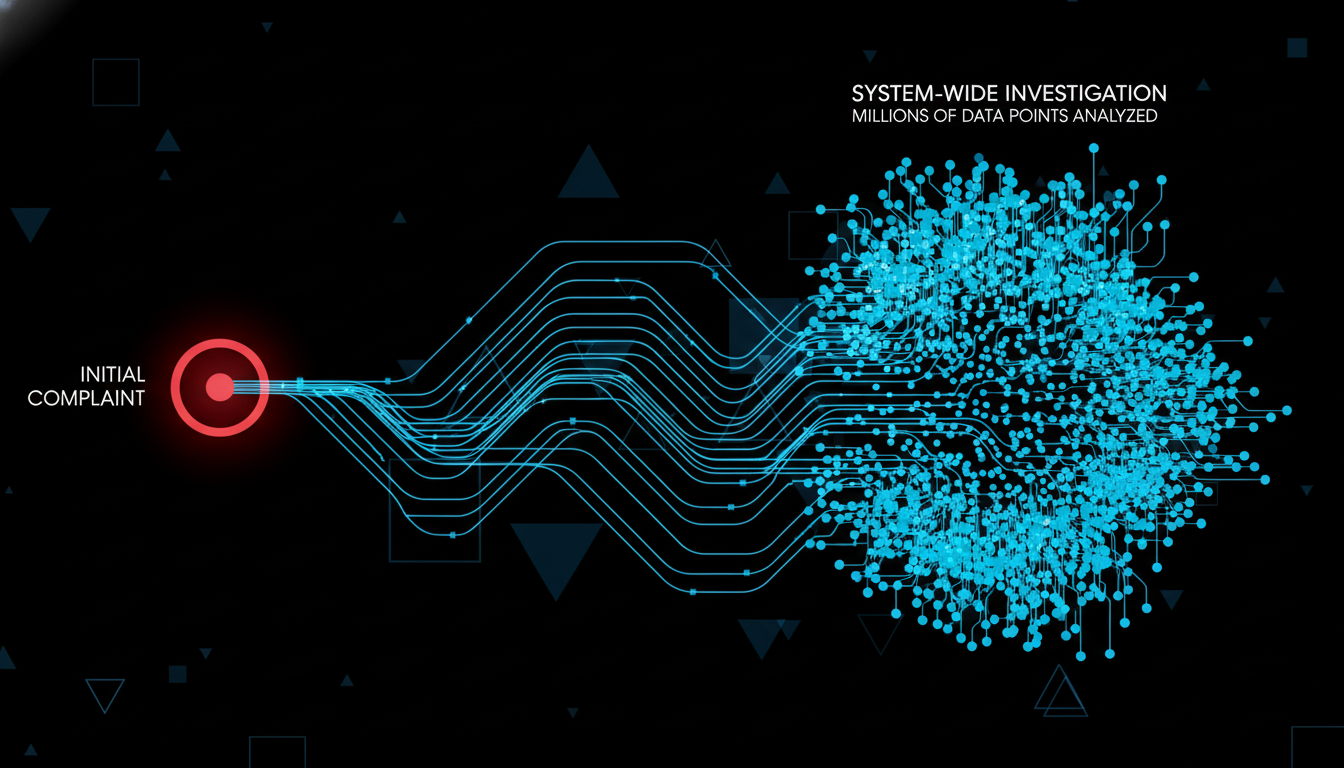 Diagram showing how one GDPR complaint can trigger system-wide enforcement
Yes, and that's exactly what this May 2026 ruling confirms. A complaint-based inquiry may lawfully address systemic issues arising on the facts and may result in "system-wide corrective measures" including administrative fines informed by systemic considerations.
That support ticket from an angry user asking for their data? It could become an audit of your entire data architecture. One incomplete data export can reveal architectural non-compliance that affects every user in your database.
Does Contract Necessity Still Work as a Legal Basis?
Meta has been fighting a broader battle over legal bases for data processing. In January 2023, Ireland's DPC fined Meta €390 million (€210M for Facebook, €180M for Instagram) after the European Data Protection Board (EDPB) ruled that Meta couldn't rely on "contractual necessity" as a legal basis for behavioral advertising.
Meta had argued that personalized ads were essential to performing the contract with users. The EDPB disagreed, finding that Meta could no longer use contracts as a basis for behavioral ads and should rely on consent instead. The regulator's position: you can't make surveillance a contractual term and call it "necessary."
This matters for every developer building ad-supported products. The default assumption—"users agreed to our Terms, so we can process their data for ads"—no longer flies in the EU. You need explicit, freely-given, informed consent. That means real opt-in checkboxes, not buried clauses in 47-page Terms of Service documents.
What This Means for Smaller Companies
Meta can afford to spend years in appeals. Your startup probably can't. Three immediate takeaways:
One complaint can trigger systemic investigation. The May 2026 ruling confirms that regulators have broad powers to expand individual complaints when they uncover systemic issues. That data access request you're dragging your feet on? It could expose architectural problems affecting your entire user base.
Data access requests are not optional. Articles 15 and 20 GDPR give users absolute rights to access and download their data. If your "Download My Data" button only exports sanitized profile information while your actual data warehouse contains browsing behavior, cross-site tracking, and inferred demographics, you're exposed. Meta's Hive warehouse—the data they didn't give the user—became the smoking gun.
Legal strategy has limits. Meta has mounted numerous legal challenges against Irish regulators. This May 2026 ruling shows that procedural arguments—"you can't investigate us this way"—are failing. Courts are granting regulators broad powers to ensure effective GDPR enforcement.
If you're building in the EU market (or have EU users), scan your site now to understand what data you're actually collecting. The gap between what your privacy policy says and what your trackers do is where fines live.
Frequently Asked Questions
Can a single GDPR complaint really lead to a €430 million fine? Yes. Ireland's High Court ruled in May 2026 that regulators can expand individual complaints into system-wide investigations if they uncover violations affecting millions of users, with fines scaled accordingly.
What are Articles 12, 15, and 20 of GDPR? Article 12 requires transparent communication about data processing, Article 15 grants users the right to access their personal data, and Article 20 provides the right to receive and transfer data in a portable format.
Is contractual necessity still a valid legal basis under GDPR? Yes, but regulators have rejected its use for behavioral advertising. The EDPB ruled in 2023 that Meta couldn't claim personalized ads were "necessary" to perform a social media contract—consent is required instead.
How long do GDPR appeals typically take? Years. Meta's €390 million fine from January 2023 is still under appeal. Of €4 billion in fines issued by Ireland's DPC, approximately €20 million has been collected, with the rest delayed by ongoing legal challenges.
What should startups do differently after this ruling? Ensure your data access tools provide complete data exports matching what's actually stored in your systems. One incomplete response to an access request could trigger a systemic investigation if it reveals architectural non-compliance.
Do I need a lawyer to understand GDPR compliance? Not necessarily for basic compliance, but legal review becomes essential if you process sensitive data, use complex tracking, or have significant EU user volume. Many violations stem from gaps between privacy policies and actual data practices that automated tools can help identify first.