What Data Does Vercel Flags Collect During Feature Rollouts?
Vercel just added feature flags to their platform. If you're shipping experiments on the vibe stack, every variant assignment now runs through Vercel's edge network. That's elegant developer experience—and a new data pathway you didn't have last month.
Feature flags expose user identifiers, behavioral segments, and conversion events. When Vercel Flags decides whether user abc123 sees variant A or B, it's logging evaluation decisions, timestamps, and user context. That's personal data under GDPR if your IDs correlate to individuals. You're now processing user experiment data through a third party.
The average developer thinks feature flags are backend config. They're not. They're behavioral tracking infrastructure that segments users based on attributes you define. If you're bucketing by email domain, device type, or geographic location, you're creating privacy obligations.
Feature flags route user decisions through external infrastructure
Do Feature Flags Require Cookie Consent Banners?
It depends on how you identify users. If Vercel Flags uses cookies or similar identifiers to maintain consistent variant assignments across sessions, that's tracking under ePrivacy rules. Most feature flag implementations set persistence cookies so users don't flip between variants on refresh.
Check your Vercel Flags configuration: if it's writing __vercel_flag_* cookies or reading browser fingerprints, you need consent before non-essential flags run. Essential flags (like infrastructure routing or security) might qualify for legitimate interest—but your marketing A/B tests don't.
The problem: developers enable flags in middleware.ts before consent fires. Your hero CTA experiment starts bucketing users on first pageview, before your consent banner renders. That's 100% of traffic running through a tracking system with zero consent.
Run a cookie scanner on a Vercel Flags deployment. You'll find cookies you didn't know existed.
What Happens to User Experiment Data When You Deploy?
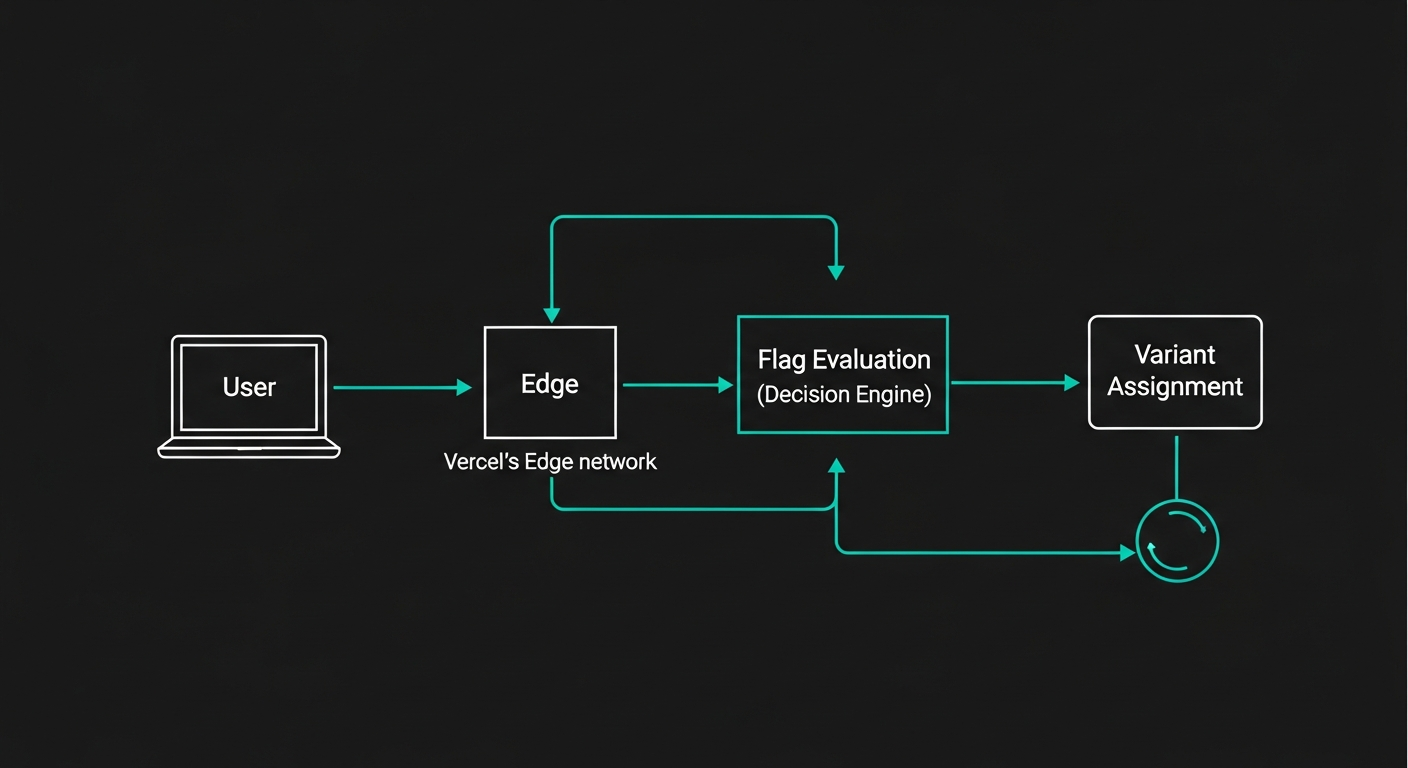 Data flow diagram of Vercel Flags user experiment architecture
Every flag evaluation hits Vercel's edge. That means user identifiers, feature keys, and variant decisions transit through Vercel's infrastructure. If you're subject to GDPR, that's a data processing agreement requirement. Vercel's DPA covers standard platform operations, but feature flag analytics create new data flows.
When you run an A/B test for 30 days, you're storing user assignments for at least that duration. Vercel Flags needs to remember which variant each user saw to maintain experiment integrity. Where does that data live? How long is it retained? Who can access aggregated results?
Most teams don't update their privacy policy when they add feature flags. Your policy says "we use Vercel for hosting"—it doesn't mention behavioral experimentation or user segmentation. That's a disclosure gap.
How Do Feature Flags Interact With AI Agent Deployments?
If you're using AI agents to ship code (like the Strix Agents scenarios we've covered), feature flags compound the privacy risk. Autonomous deployments might enable experiments without human review of what data they're collecting.
An AI agent wraps a new feature in a Vercel Flag, targets 10% of users based on referrer URL, and ships. Nobody asked: does that referrer targeting qualify as profiling? Is the experiment consent-gated? The agent optimized for velocity, not compliance.
This is the same blind spot we see with AI-built apps generally—tools that make shipping faster also make privacy review easier to skip. Feature flags are developer infrastructure, but they create user-facing data collection.
What Should You Check Before Enabling Vercel Flags?
Map your flag identifiers. If you're using email hashes, IP addresses, or user IDs from your database, that's personal data. Document it in your processing records.
Review your DPA. Vercel's standard agreement might not explicitly cover feature flag analytics. If you're processing EU user data, confirm your legal basis.
Gate non-essential flags. Marketing experiments and UI tests need consent. Infrastructure routing and security flags might not. Know the difference before your flags run.
Update your privacy policy. Users deserve to know you're running experiments. "We test features with subsets of users" is minimum disclosure.
Check for cookies. Use a scan your site free tool to see what Vercel Flags actually writes. You might be surprised.
Vercel Flags solves real problems. Gradual rollouts prevent disasters. A/B tests drive product decisions. But every feature flag is a data decision about users. The vibe stack just added a new compliance surface—treat it like one.